
Introduction to the calibration process of optical isolation probe
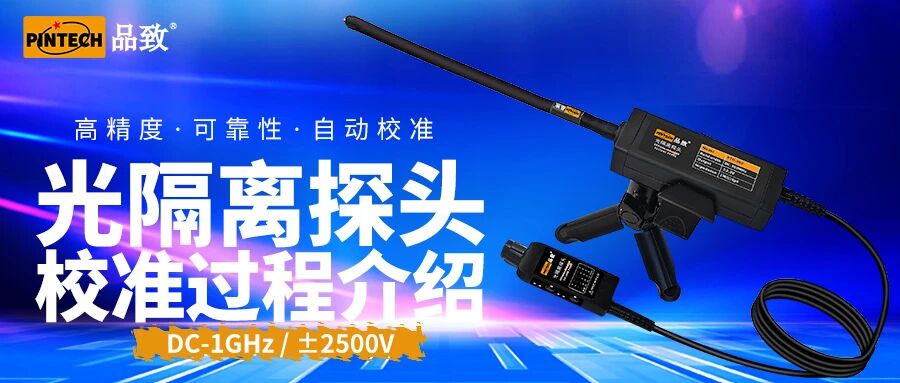
In electronic measurement experiments, calibrating and compensating measurement tools can effectively enhance the accuracy and reliability of measurement results. Traditional calibration methods often require the use of external signal sources or disconnecting the input connection between the circuit under test and the measurement equipment. For example, calibrating a common passive probe requires the insertion of a standard square wave signal, while calibrating an oscilloscope involves removing the input connection on the channel. However, when using the PINTECH PTO series of optoisolated probes, users can simply double-click the "down" button on the probe's receiving end to initiate calibration, without disconnecting the probe from the oscilloscope or the circuit under test.
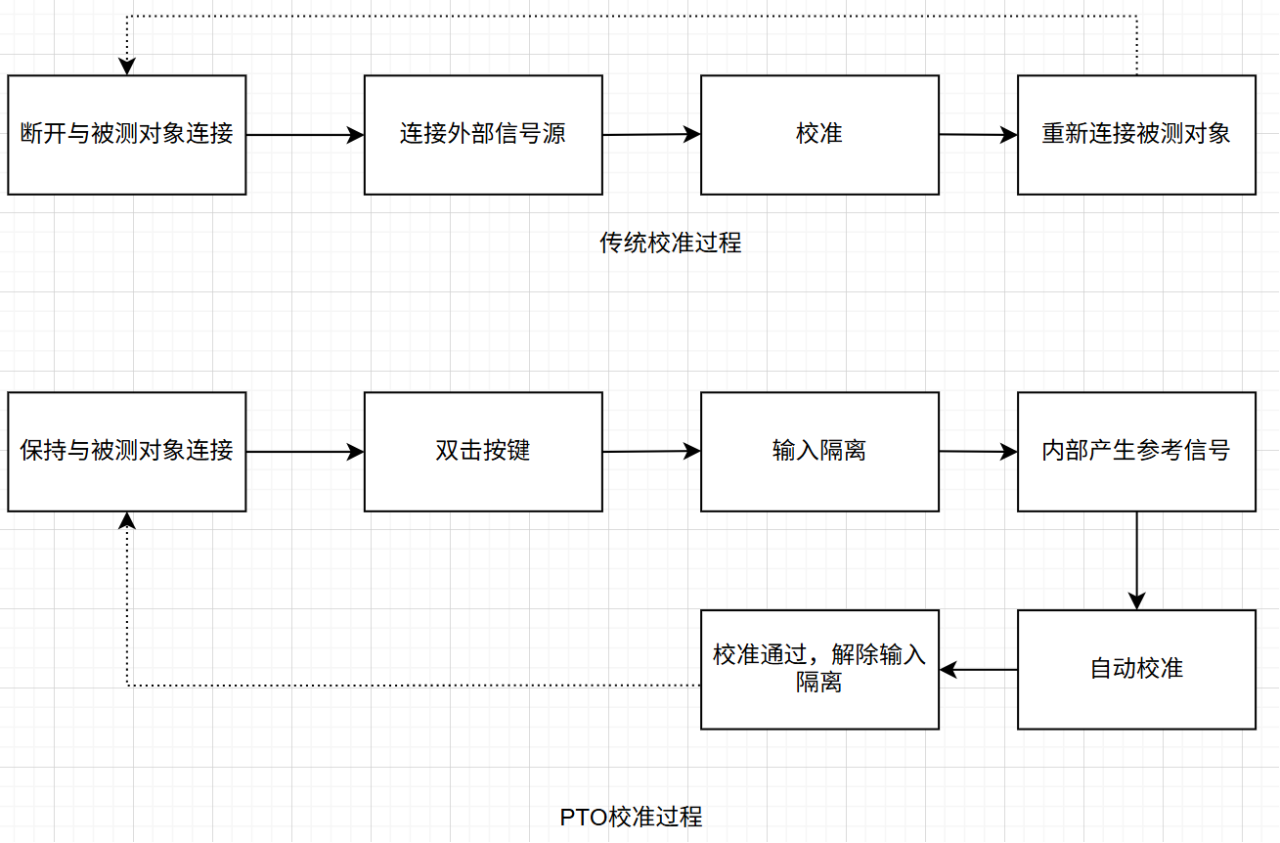
The PTO series of optical isolation probes achieves efficient and precise calibration with "no disconnection and no external connection" thanks to its in-situ self-calibration technology and all-solid-state architecture design of core functional modules. When calibration is initiated, the probe's transmitting end automatically cuts off the input transmission path, isolating it from the interference of the measured signal, without disconnecting the physical connection between the probe and the measured system. At the same time, a built-in high-precision reference signal module automatically injects standard calibration signals and adjusts gain parameters in a closed-loop based on feedback data from the receiving end. Compared to traditional external signal source calibration schemes, this design completely avoids issues such as accuracy drift of external devices, interface incompatibility, and parameter setting errors, eliminating the introduction of additional errors and ensuring the consistency and accuracy of multiple calibration results.
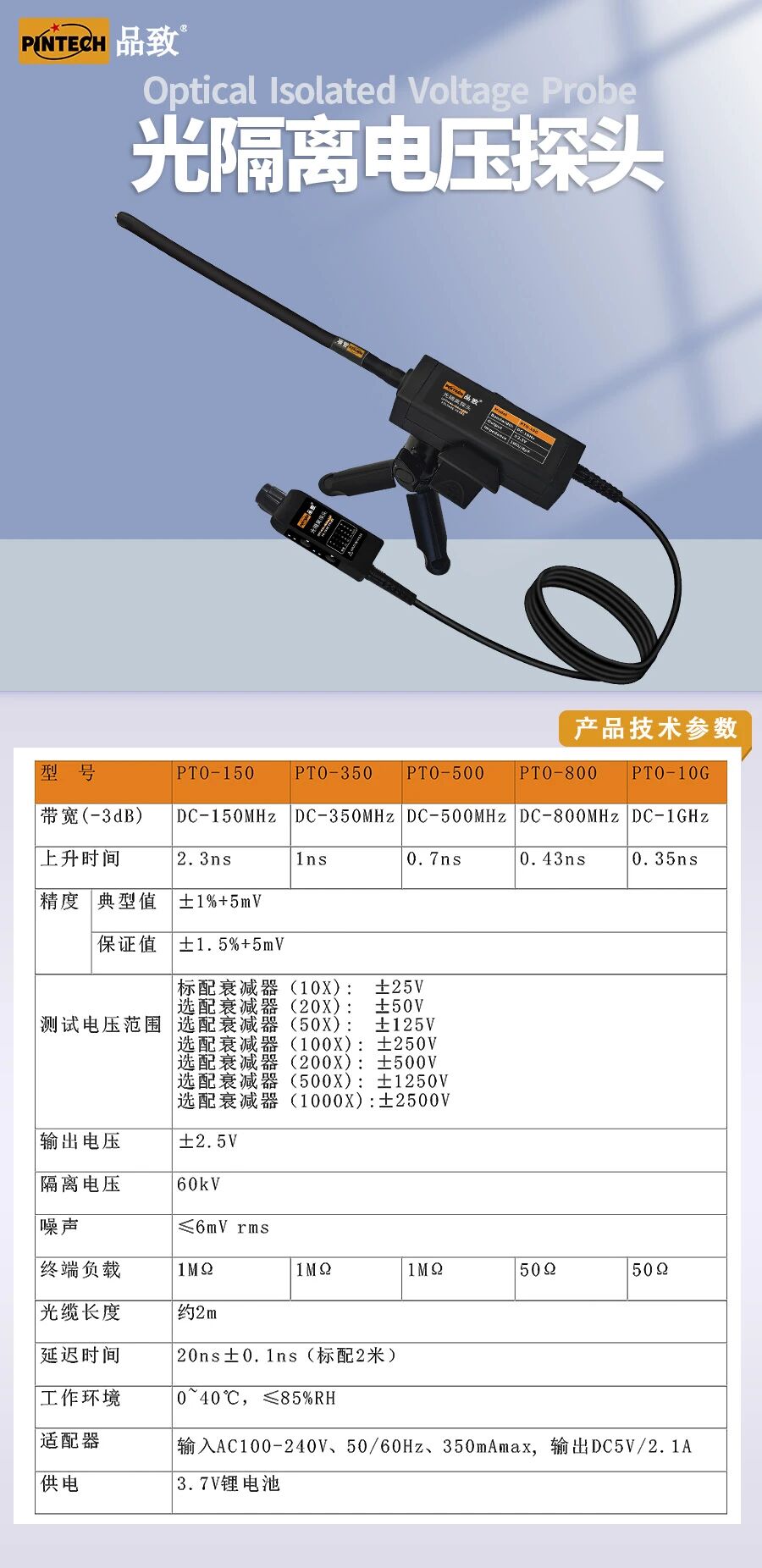
In addition, the signal transmission link and calibration function module adopt an all-solid-state design, abandoning the mechanical relay structure. Coupled with the dual operation prompts of indicator lights and buzzers, there is no relay click sound during the calibration process, eliminating the impact of mechanical wear and contact aging on the probe's service life and long-term stability from the root. In actual measurement scenarios, users do not need to additionally equip with dedicated signal sources, nor do they need to repeatedly disassemble and build connection lines. This not only saves equipment procurement costs and calibration preparation time, but also reduces connector wear and tear, and minimizes the risk of interference or physical damage to the measured circuit caused by improper wiring operations. It fully guarantees the continuity of the measurement process and the safety of the measured system.
In summary, the PTO series of opto-isolated probes, through the collaborative design of internal isolation mechanism, autonomous reference signal source, and all-solid-state architecture of core modules, strike a balance between calibration convenience, result reliability, and product durability, significantly enhancing overall measurement efficiency.