
The difference between constant voltage mode and constant current mode of a power amplifier

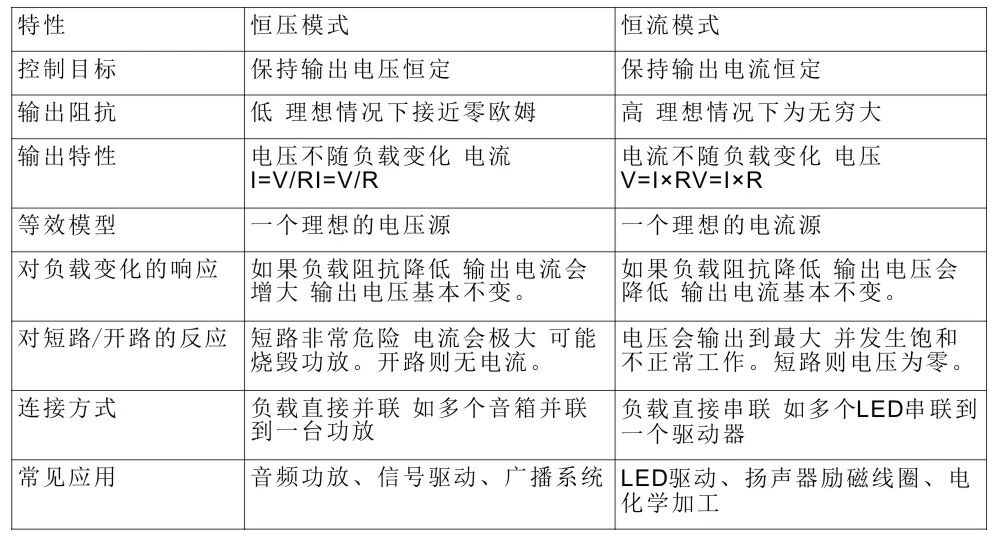
Whether to choose constant voltage or constant current mode for the amplifier depends on the characteristics of the load and system requirements:
If a unified signal or power needs to be provided for multiple parallel loads, and it is desired that the system operation remains unaffected by changes in load, the constant voltage mode should be selected.
If precise control of the current flowing through the load is required, and the impedance of the load itself may vary, the constant current mode should be selected.
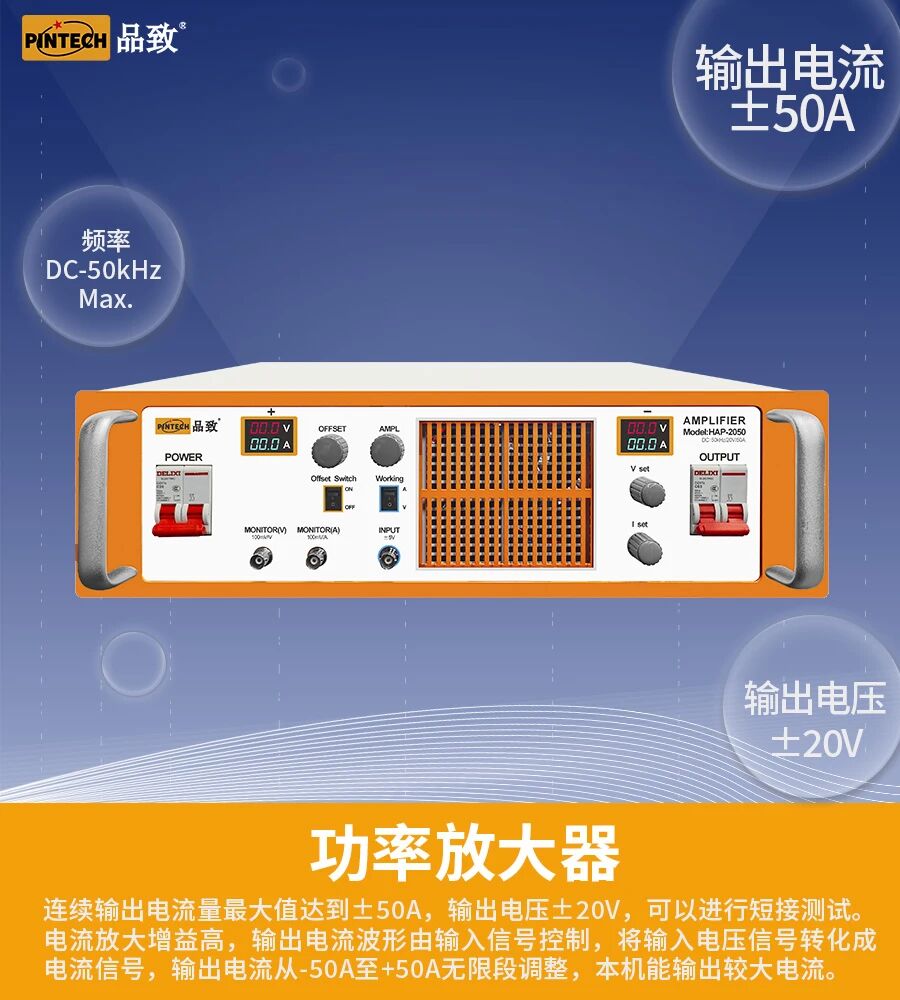
Detailed comparison table
Important precautions
Energy conservation: Regardless of the mode, the output power P=V×I cannot exceed the capability of the power amplifier itself. In constant voltage mode, the lower the load impedance, the greater the required output current, which cannot exceed the maximum current output capability of the power amplifier. In constant current mode, the higher the load impedance, the greater the required output voltage, which cannot exceed the maximum voltage output capability of the power amplifier.
The mode is not absolutely isolated: many advanced power amplifiers or drivers can switch between two modes, or have complex protection circuits. For example, an LED driver is essentially a constant current source, but it also has a maximum output voltage limit, which constitutes a "constant current and constant voltage" boundary region.
Understanding the difference between these two modes is crucial for the correct design and application of power electronic systems, as it can effectively prevent equipment damage or optimize system design.